Gorgon · gaze · transformation
Medusa
One of the Gorgons in Greek myth, Medusa is most famously defeated by Perseus. Later art and literature have reimagined her as a figure of danger, protection, and power.
Mythical beings can personify danger, protect sacred places, explain the unknown, or challenge a hero’s assumptions. Their meanings change across time and retelling.
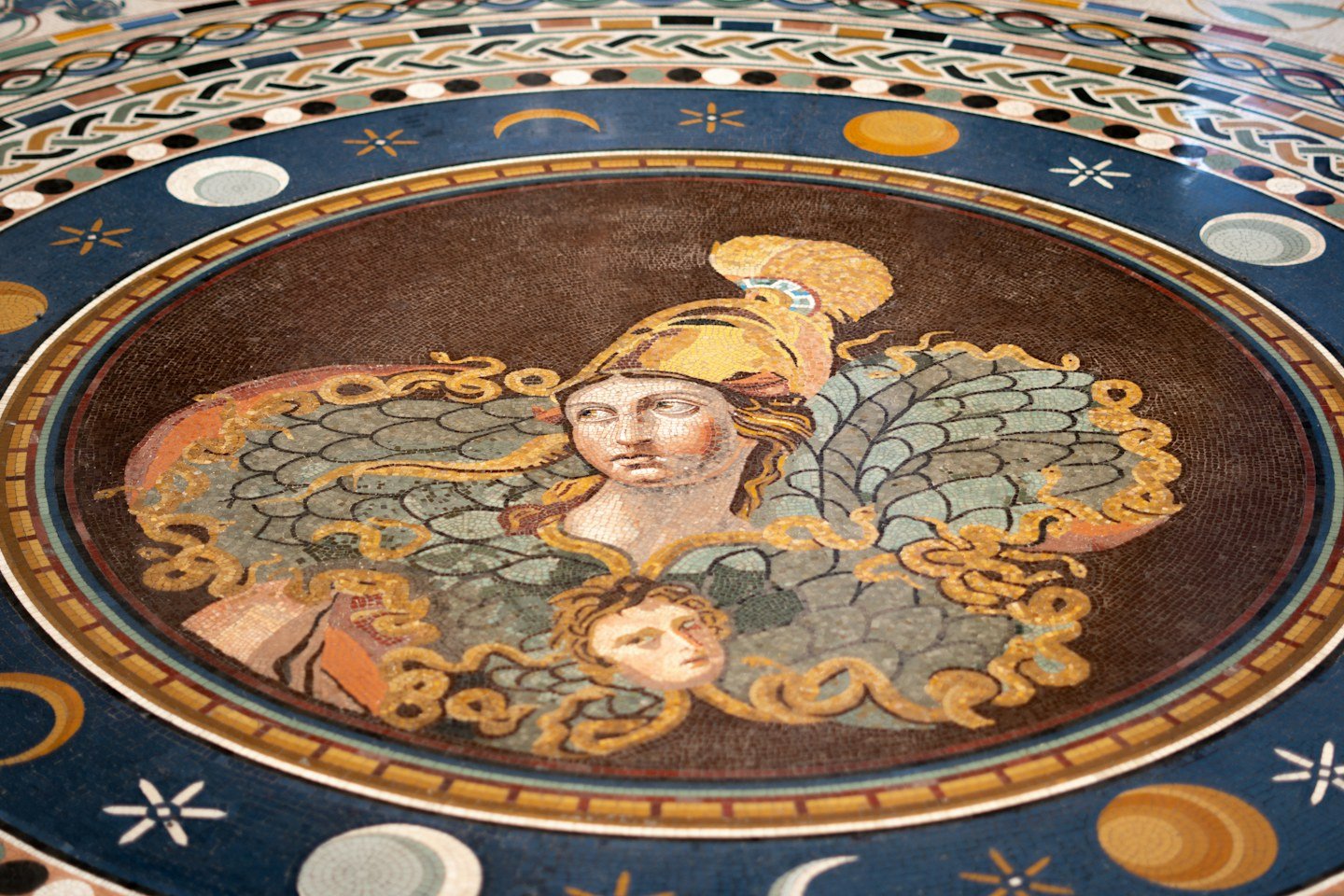
A monster is rarely just an obstacle to defeat. The Minotaur belongs to the story of a maze, tribute, power, and the violence of a royal household. Cerberus guards a threshold between the living and the dead. Medusa’s image has changed dramatically—from a feared Gorgon in ancient sources to a symbol reclaimed by later artists and readers.
When a creature appears, notice where it lives, who fears it, and who has the authority to name it monstrous. Those details reveal the story’s deeper concerns.
These figures come from different cycles and should not be treated as one standardized creature catalog.
One of the Gorgons in Greek myth, Medusa is most famously defeated by Perseus. Later art and literature have reimagined her as a figure of danger, protection, and power.
In the Cretan story cycle, the Minotaur is kept in a labyrinth built by Daedalus. Theseus enters the maze with Ariadne’s help.
The many-headed hound guards the entrance to Hades in Greek accounts. Heracles’ labor to bring Cerberus to the surface tests strength and control.
Heracles faces the Hydra as one of his labors. The creature’s heads multiply in many tellings, making the task a test of strategy as much as force.
The Theban Sphinx asks a riddle in the story of Oedipus. In Greek art, the sphinx is a hybrid guardian figure with a long history beyond this single tale.
In the Odyssey, the Sirens lure sailors with song. Odysseus survives by planning for the danger rather than pretending he is immune to it.